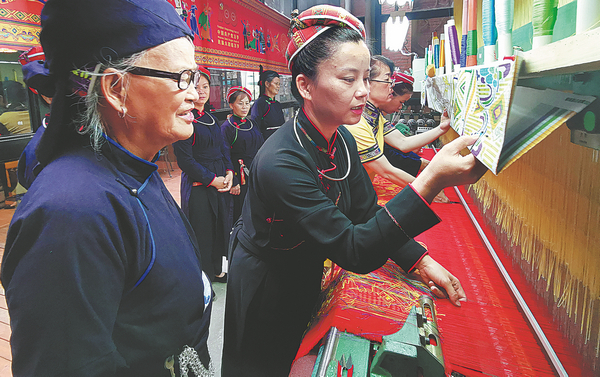
Zhuang Brocade
Introduction
Zhuang brocade is a traditional textile art form originating from the Guangxi Zhuang autonomous region in southern China. It is deeply rooted in the customs and traditions of the Zhuang ethnic group, one of China's largest minority communities. Known for its vibrant colors, intricate patterns, and cultural significance, Zhuang brocade has been recognized as a national-level intangible cultural heritage. The art form reflects the rich history and artistic ingenuity of the Zhuang people, with archaeological evidence tracing its origins back to the Western Han Dynasty (206 BC-AD 24). Over centuries, Zhuang brocade has evolved, incorporating influences from various dynasties, including the Tang (618–907), Song (960–1279), Ming (1368–1644), and Qing (1644–1911) periods.
History
The history of Zhuang brocade is intertwined with the cultural and artistic development of the Zhuang ethnic group. Archaeological findings suggest that the craft dates back over two millennia, originating during the Western Han Dynasty. Initially, Zhuang brocade served practical purposes, such as clothing and ceremonial items, but it gradually became a symbol of ethnic identity and artistic expression.
During the Tang and Song dynasties, the designs and techniques of Zhuang brocade became more sophisticated, incorporating intricate patterns inspired by flora, fauna, and geometric motifs. The Ming and Qing dynasties further refined the craft, emphasizing bold colors and elaborate designs that reflected the cultural richness of the Zhuang people. Over time, Zhuang brocade became a treasured art form, celebrated for its aesthetic and cultural value.
Characteristics
Materials
Zhuang brocade is traditionally woven using natural fibers such as cotton, silk, and hemp. These materials are carefully selected for their durability, texture, and ability to hold vibrant dyes. The use of plant-based dyes is a hallmark of Zhuang brocade, with artisans employing traditional dyeing techniques to achieve a wide range of colors. In recent years, innovations such as bio-protein fibers have been introduced to enhance the comfort and longevity of the fabric.
Weaving Techniques
The weaving techniques of Zhuang brocade are highly intricate and require exceptional skill. Artisans use traditional wooden looms to create the fabric, employing a combination of hand-weaving and machine-assisted methods. The process involves meticulous attention to detail, with weavers carefully aligning threads to form complex patterns. The craft is often passed down through generations, with master weavers training apprentices to preserve the techniques and traditions.
Patterns and Colors
The patterns and colors of Zhuang brocade are distinctive and symbolic. Common motifs include geometric shapes, floral designs, and representations of animals, each carrying cultural significance. The color palette is bold and vibrant, featuring shades of red, blue, yellow, green, and black. Recent innovations have expanded the range of colors to over 220 shades, allowing for greater artistic expression and versatility in design.
Cultural Significance
Zhuang brocade holds profound cultural significance for the Zhuang ethnic group. It is not only a form of artistic expression but also a medium for preserving and transmitting cultural heritage. The designs often incorporate symbols and motifs that reflect the beliefs, traditions, and values of the Zhuang people. As a national-level intangible cultural heritage, Zhuang brocade represents the importance of safeguarding ethnic cultures and promoting diversity.
The art form also plays a vital role in community life, serving as a source of identity and pride for the Zhuang people. It is used in traditional ceremonies, festivals, and daily life, symbolizing unity and continuity. The resurgence of interest in Zhuang brocade has led to increased efforts to preserve and promote the craft, ensuring its legacy for future generations.
Modern Applications
In recent years, Zhuang brocade has found new applications in modern design and fashion. Collaborations between local artisans and international designers have brought the craft to global markets, showcasing its beauty and cultural significance. High-end products such as handbags, clothing, and accessories featuring Zhuang brocade elements have gained popularity, blending traditional aesthetics with contemporary styles.
Preservation and Promotion
Efforts to preserve and promote Zhuang brocade have been multifaceted, involving community workshops, cultural exhibitions, and international collaborations. Local initiatives, such as those led by Guangxi Jinzhuangjin Culture and Art Co., have provided training and employment opportunities for villagers, enabling them to contribute to the craft's revival. These programs have empowered artisans, particularly women, to earn income while preserving their cultural heritage.
International collaborations have further enhanced the visibility of Zhuang brocade, with exhibitions and events showcasing its artistry to audiences worldwide. Partnerships with organizations like the China-Italy Cultural Exchange Association have facilitated the creation of innovative products and brands, ensuring the craft's relevance in modern markets.
The establishment of cultural promotion associations and ecological parks has also played a crucial role in raising awareness and fostering appreciation for Zhuang brocade. These efforts highlight the importance of integrating traditional art forms into contemporary contexts, ensuring their sustainability and continued impact.
In conclusion, Zhuang brocade is a testament to the rich cultural heritage and artistic excellence of the Zhuang ethnic group. Its vibrant colors, intricate patterns, and cultural significance make it a unique and valuable art form. Through dedicated preservation and innovative applications, Zhuang brocade continues to thrive, bridging the gap between tradition and modernity while celebrating the diversity of Chinese culture.








